What Is Product Liability?
Product liability refers to the legal responsibility imposed on manufacturers, distributors, or sellers when a consumer is injured by a defective or dangerous product. The law makes sure that the companies that create and market products are accountable when those products cause harm. When a product fails to perform safely as expected—and someone gets injured—the injured party may be entitled to compensation under product liability law.
This area of law is especially important because consumers rely on everyday products such as household appliances, vehicles, medical devices, toys, and electronics. If any of these items contain hidden dangers, the consequences can be severe. To learn more about the three major types of product defects, see our related Legal Facts Center article on Types of Product Defects.
Who Can Be Held Liable?
One unique aspect of product liability is that multiple companies can be held responsible—not just the manufacturer. This is because many products pass through a long chain of distribution before reaching the consumer.
Common Parties Who May Be Liable
- Product Manufacturer – The creator of the product or its components
- Parts Manufacturers – Companies that produce specific pieces or attachments
- Assemblers or Installers – Responsible for building or configuring the final product
- Wholesalers – Middle distributors
- Retailers – Stores or online sellers who place products into the hands of consumers
Each party may be responsible if their actions contributed to the product’s defect. Product liability law does not require the injured consumer to prove negligence. Instead, the law often uses a strict liability standard—meaning a company can be held liable simply because it produced a defective product.
Types of Product Liability Claims
There are three main categories of product liability claims. Understanding these helps identify the cause of the defect and which party may be responsible.
1. Design Defects
A design defect means the product’s blueprint is unsafe. Even if perfectly built, the product would still pose a danger. For example, a vehicle designed with a high tip-over risk or a chair designed with weak legs.
2. Manufacturing Defects
These defects happen when a product is incorrectly made or assembled. A safe design becomes dangerous due to mistakes such as contaminated materials or missing parts. This defect usually affects specific batches, not the entire product line.
3. Failure-to-Warn (Marketing Defects)
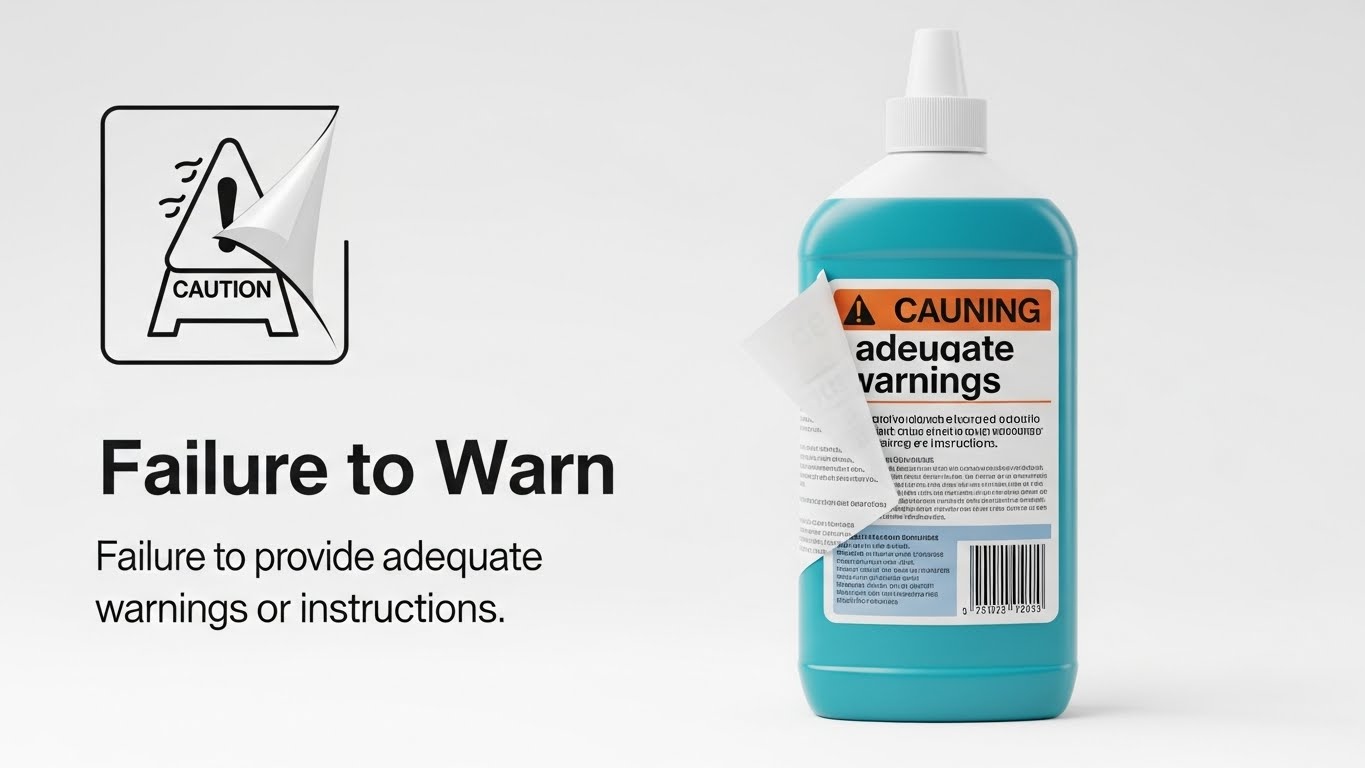
Manufacturers must warn consumers about non-obvious risks. If a product lacks proper warnings or instructions, it may be considered unsafe. Common failure-to-warn cases include insufficient labels on chemicals, prescription drugs, and machinery.
For a deeper breakdown of each defect type, see Types of Product Defects.
[Insert Image 2 Here]
Examples of Product Liability Cases
Product liability applies to a wide range of items. Some examples include:
- Exploding batteries in smartphones or e-cigarettes
- Faulty vehicle airbags or brake systems
- Dangerous prescription drugs
- Household appliances that spark or cause electrical fires
- Children’s toys with choking hazards
- Defective power tools
Every year, thousands of products are recalled because of safety concerns. Consumers should stay aware of recall alerts and monitor any updates involving products they own.
What You Must Prove in a Product Liability Claim
Although product liability cases are often easier to prove than negligence-based claims, the injured person still needs to show:
- The product was defective
- The defect existed when it left the manufacturer
- The defect caused the injury
- You were using the product as intended or in a foreseeable manner
Evidence is crucial. Photos, videos, the defective product itself, medical records, receipts, and witness testimony all help build a stronger claim.
Compensation You May Recover
Victims injured by defective products may be entitled to compensation for both economic and non-economic damages. These may include:
- Medical expenses
- Lost income
- Pain and suffering
- Disability or disfigurement
- Property damage
- Wrongful death damages (if applicable)
What to Do If You Believe a Product Caused Your Injury
If a product injures you or a loved one, follow these steps immediately:
- Seek medical attention and keep all records.
- Do not dispose of the product. Preserve it exactly as it is.
- Take photos and videos of the product, injury, and scene.
- Check for recalls through government databases like the CPSC.
- Consult a product liability attorney for guidance.
You can explore similar topics in our Legal Facts Center, including What To Do if You Were Injured by a Defective Product.
Final Thoughts
Product liability plays a crucial role in protecting consumers from harm. When a product fails to perform safely, the law ensures that injured individuals can seek justice and financial compensation. Whether the defect lies in design, manufacturing, or warnings, understanding how product liability works gives consumers the power to take action.
If you believe you were harmed by a defective product, learning your rights is the first step toward receiving the help and justice you deserve.
