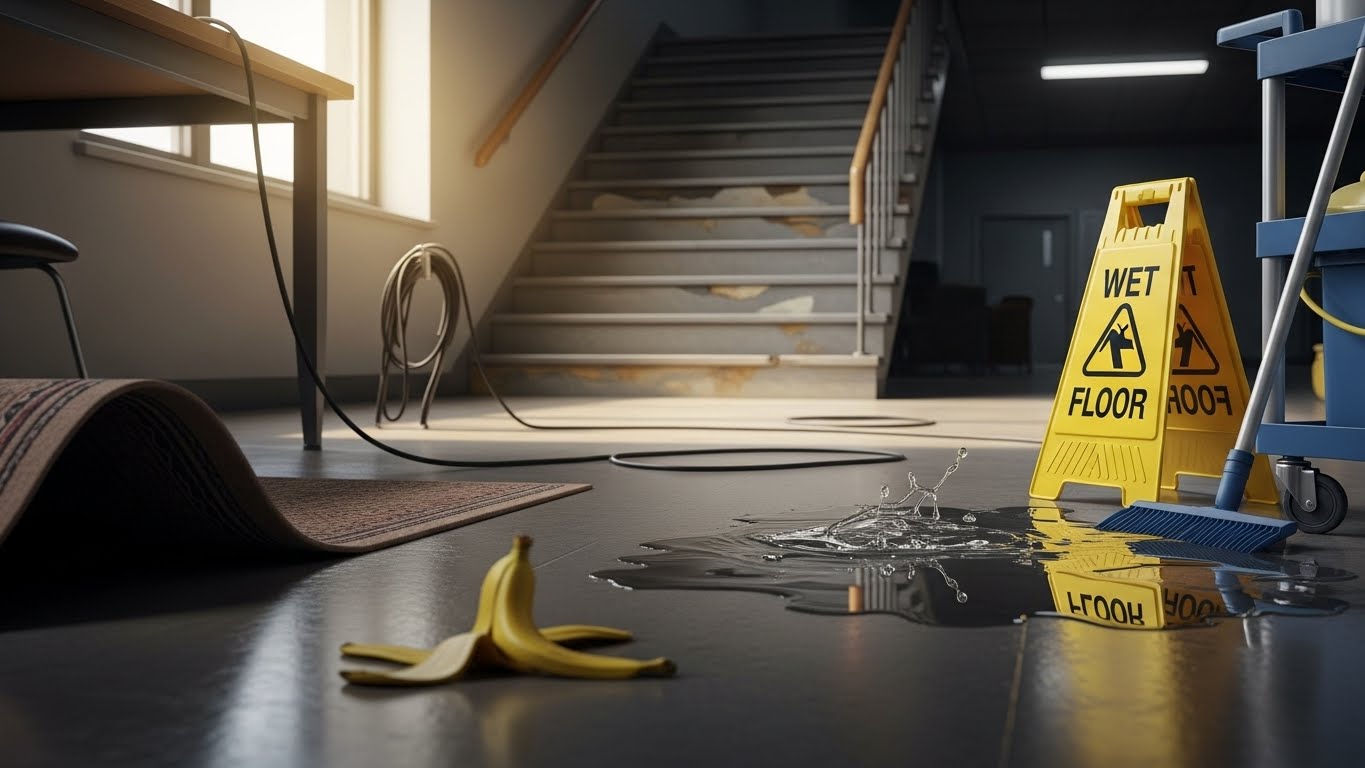
Common Slip-and-Fall Hazards
Slip-and-fall accidents are among the most common causes of injuries in both homes and public spaces. They can lead to serious injuries, including broken bones, head trauma, and long-term disability. Understanding common slip-and-fall hazards can help property owners prevent accidents and victims protect their legal rights.
Why Slip-and-Fall Accidents Happen
Slip-and-fall accidents occur when a person loses balance due to hazardous conditions on a property. The property owner may be legally liable if the hazard was foreseeable and not addressed. Common causes include wet or slippery surfaces, uneven floors, poor lighting, and debris in walkways.
Most Common Slip-and-Fall Hazards
1. Wet or Slippery Floors
Spilled liquids, recently mopped floors, or wet tiles are frequent causes of slip-and-fall injuries. Businesses are expected to clean spills promptly and place warning signs to alert visitors.
2. Loose Rugs or Mats
Unsecured rugs or mats can easily slide or bunch up, creating tripping hazards. Property owners should secure mats with non-slip backing or remove them altogether.
3. Uneven Surfaces
Uneven flooring, cracked sidewalks, or potholes can cause trips and falls. Regular inspections and timely repairs are crucial to prevent injuries.
4. Poor Lighting
Inadequate lighting can make hazards hard to see. Dark hallways, staircases, and parking areas increase the risk of accidents, particularly at night.
5. Cluttered Walkways
Items left in walkways, such as boxes, cords, or merchandise, can create obstacles. Property owners must ensure pathways remain clear.
6. Stairs and Handrails
Broken or missing handrails, uneven stair heights, and slippery steps are common causes of falls in both private and commercial properties.
7. Weather-Related Hazards
Ice, snow, or rain can create slippery conditions outdoors. Property owners must take reasonable precautions, such as salting walkways or installing anti-slip mats.
Legal Responsibility of Property Owners
Property owners have a duty to maintain safe premises and address known hazards. Failure to do so may lead to a premises liability claim. To prove negligence, victims must show that:
- The property owner had a duty of care.
- They breached this duty by failing to fix or warn about a hazard.
- The breach directly caused the injury.
- The victim suffered damages.
Preventing Slip-and-Fall Accidents
Both property owners and visitors can take steps to reduce the risk of slips and falls:
For Property Owners
- Conduct regular safety inspections.
- Clean spills promptly and place warning signs.
- Repair uneven surfaces and broken stairs.
- Ensure proper lighting in all areas.
- Secure rugs, mats, and other loose items.
For Visitors
- Wear appropriate footwear.
- Pay attention to surroundings and warning signs.
- Report hazards to property management immediately.
Steps to Take After a Slip-and-Fall Injury
If you are injured, taking prompt action can protect your claim:
1. Document the Hazard
Take photos of the hazard and the area where you fell. Include date and time if possible.
2. Seek Medical Attention
Even minor injuries should be evaluated. Medical records are crucial for proving damages.
3. Report the Accident
Notify the property owner, manager, or staff. Ask for an official incident report.
4. Preserve Evidence
Keep any items involved in the accident, such as shoes or clothing, and note witness contact information.
5. Consult a Premises Liability Lawyer
Experienced attorneys can guide victims through filing a claim and negotiating compensation.
Compensation in Slip-and-Fall Cases
Victims may be eligible for compensation, including:
- Medical bills
- Lost wages
- Pain and suffering
- Emotional distress
- Long-term rehabilitation costs
Related Articles
Being aware of common slip-and-fall hazards can help both property owners prevent accidents and victims understand their rights. Taking preventive measures and documenting incidents can make all the difference in protecting safety and pursuing legal claims.
