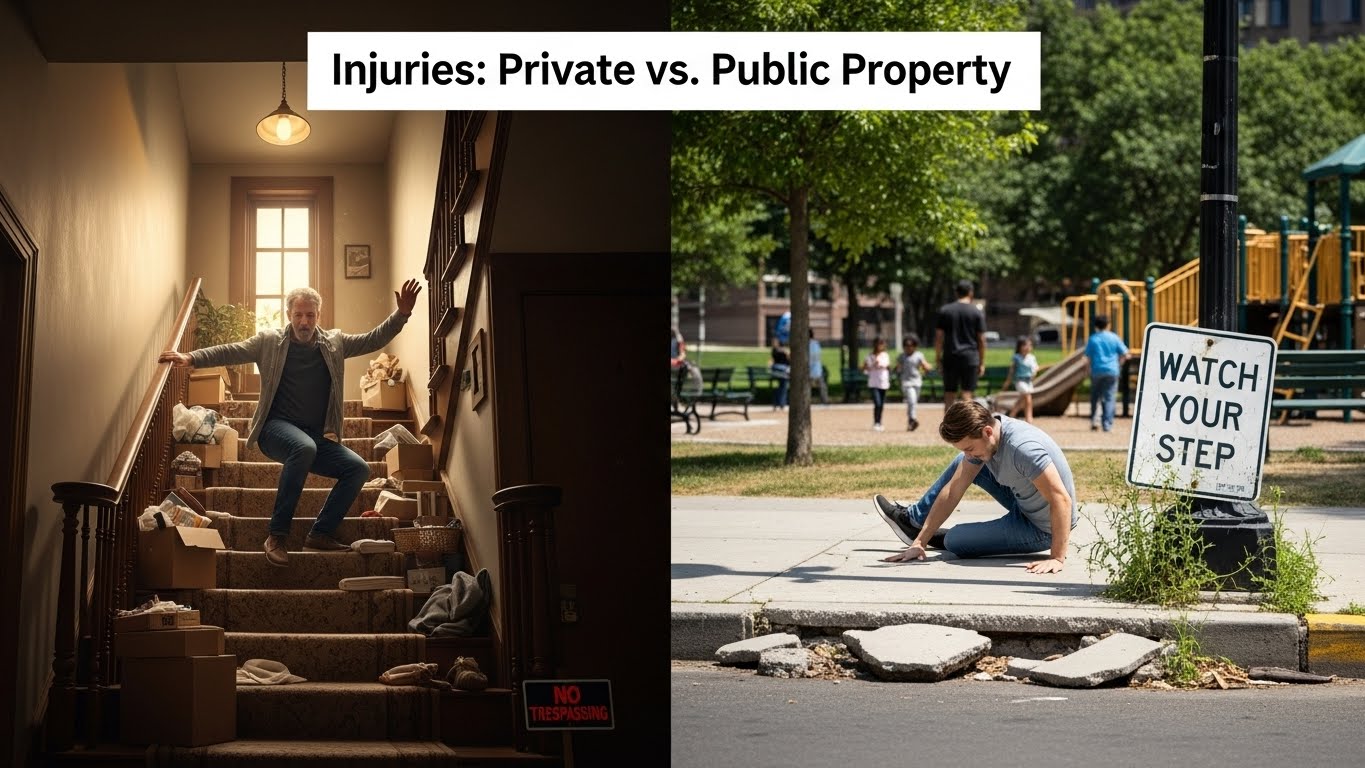
Injuries on Private Property vs. Public Property
Accidents can happen anywhere — inside a home, at a store, on a sidewalk, or in a government building. But when an injury occurs, one of the most important questions is: Who is responsible? Understanding the difference between injuries on private property versus public property can significantly affect the claims process, legal requirements, and the level of compensation a victim may receive.
This guide explains how liability works in both scenarios, the legal obligations of property owners, and what steps victims should take after an injury.
What Is Private Property?
Private property includes any location owned by an individual, business, or organization. Examples include:
- Homes and residential properties
- Apartments and condominiums
- Retail stores and shopping malls
- Restaurants and entertainment venues
- Office buildings and commercial spaces
Owners and managers of private property are legally required to maintain reasonably safe conditions for all lawful visitors. When they fail to do so, they may be held liable for resulting injuries.
Examples of Injuries on Private Property
- Slip and fall accidents due to wet floors
- Dog bites
- Broken steps or unsafe staircases
- Falling merchandise in stores
- Inadequate security leading to assault
Private property claims are typically handled through insurance companies such as homeowner’s insurance, renter’s insurance, or commercial liability insurance.
What Is Public Property?
Public property is owned and maintained by government entities, such as cities, counties, states, or federal agencies. Examples include:
- Parks and playgrounds
- Public sidewalks
- Government buildings
- Schools and libraries
- Public transportation facilities
Suing the government is different than suing a private owner. Governments often have special rules, shortened deadlines, and immunity protections.
Examples of Injuries on Public Property
- Tripping on uneven sidewalks
- Playground equipment malfunctions
- Falling inside a city building
- Accidents due to poor lighting in public parking lots
These cases are governed by strict laws known as government tort claims, which require victims to follow specific procedures.
Key Differences Between Private and Public Property Injury Claims
The claims process varies significantly, especially when the government is involved. Below are the most important differences.
1. Liability Rules
Both private and public property owners owe a duty of care, but the application differs:
Private Property
Businesses and homeowners must repair hazards, warn visitors of dangers, and conduct reasonable inspections.
Public Property
Government entities must keep public spaces safe but may be protected by immunity laws unless negligence is clearly proven.
2. Deadlines to File a Claim
This is one of the biggest differences.
Private Property Timeline
Most states allow 1–3 years to file a personal injury lawsuit.
Public Property Timeline
Many states require a formal claim within 30 to 180 days. Failure to meet this deadline usually ends the case before it starts.
3. Notice Requirements
Public property cases often require written notice to the government before filing a lawsuit. Private property cases do not.
4. Evidence Requirements
Both types require proof of negligence, but public property cases may require additional documentation, such as maintenance records or incident reports.
5. Limits on Damages
Government agencies often cap how much compensation a victim can recover. Private owners generally do not have these limits.
How to Prove Liability in Both Types of Cases
Regardless of where the injury occurs, the victim must show that negligence caused the accident.
To prove negligence, victims must establish:
- The property owner had a duty of care
- They failed to fulfill that duty
- The victim suffered an injury
- The unsafe condition caused the injury
Common Forms of Evidence
- Photos of the hazard
- Witness statements
- Incident reports
- Medical records
- Security footage
Steps to Take After an Injury on Any Property
If you were hurt on private or public property, taking the right steps can protect your claim.
1. Document the scene
Take clear photos of the hazard, surroundings, and injuries.
2. Report the incident
Notify the property owner or manager. For public property, file an official report with the city or agency.
3. Get medical treatment
Medical records play a major role in proving damages.
4. Avoid giving detailed statements to insurers
Insurance adjusters may attempt to minimize or deny your claim.
5. Contact a premises liability attorney
An attorney can help navigate deadlines, government immunity rules, and complex evidence requirements.
Compensation Available for Victims
Victims may be able to recover damages for:
- Medical expenses
- Lost income
- Pain and suffering
- Emotional distress
- Long-term disability
- Wrongful death (in fatal cases)
The type of property may affect the total value of the claim due to immunity caps on government liability.
Private Property vs. Public Property: Which Cases Are Easier?
Generally, private property cases are easier because:
- No government immunity protections
- Longer deadlines
- Clearer liability rules
- Fewer restrictions on damages
Public property cases can still be won, but they require strict compliance with state-specific claim procedures.
When You Should Contact an Attorney
You should consult a lawyer immediately if your injury happened on:
- a public sidewalk
- a city building
- a government-operated park
- a store, apartment complex, or private walkway
Premises liability cases become stronger when handled early, especially when the government is involved.
Related Articles
Understanding the differences between private and public property injuries helps you protect your rights, strengthen your claim, and pursue the compensation you deserve.
