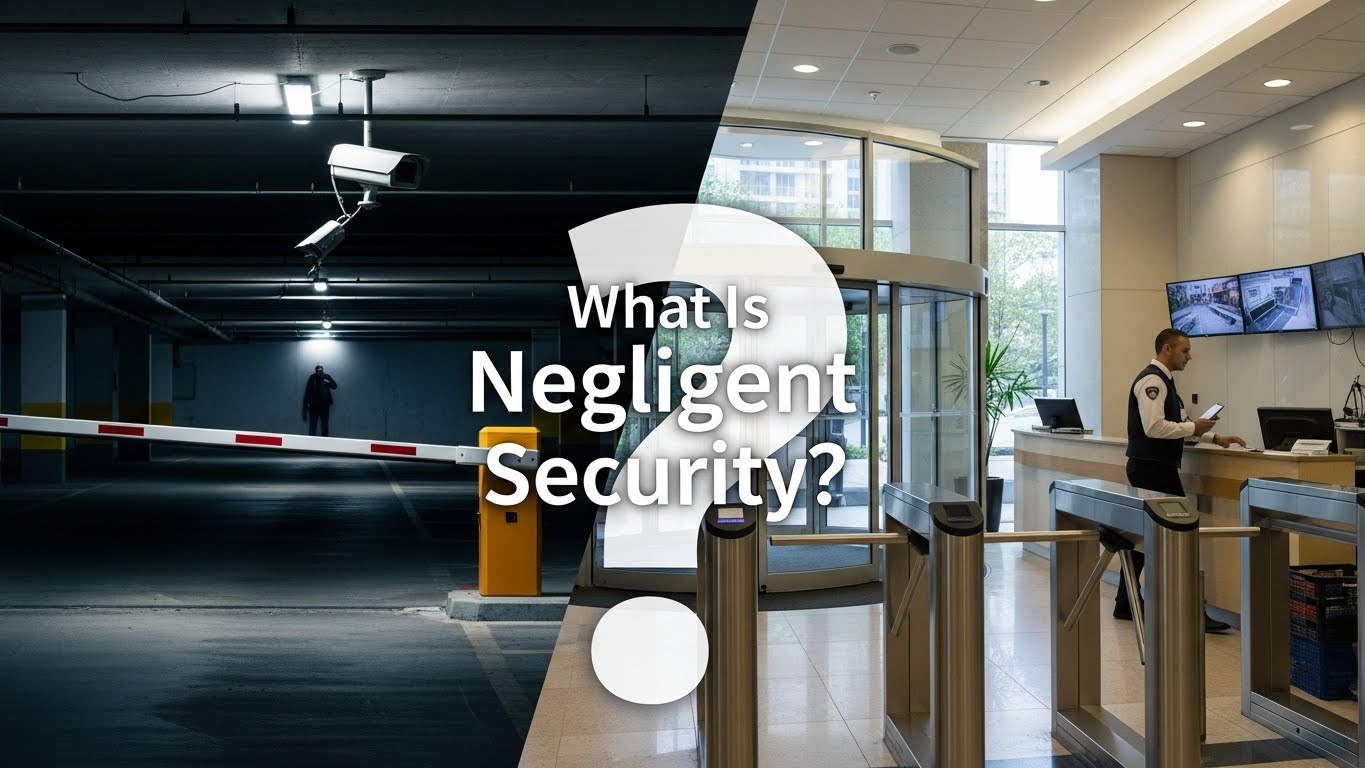
What Is Negligent Security?
Negligent security is a type of premises liability claim that arises when a property owner fails to take reasonable steps to protect visitors from foreseeable criminal activity. When a crime such as assault, robbery, or sexual violence occurs due to inadequate security, the property owner may be held legally responsible for the victim’s injuries.
This area of law exists because businesses and property owners have a legal duty to keep their premises reasonably safe. If they ignore warning signs, fail to provide basic protections, or overlook known security risks, victims can pursue compensation through a negligent security claim.
How Negligent Security Happens
Negligent security often occurs in places where large numbers of people gather or where crime has happened before. Property owners must take precautions that match the level of risk on their premises. When they fail to do so, crimes that could have been prevented are allowed to happen.
Common Examples of Negligent Security
- Poor or broken lighting in parking lots
- Failure to hire security guards despite high-risk location
- Not installing or maintaining surveillance cameras
- Broken or unlocked doors, gates, or windows
- Inadequate background checks on employees
- Lack of access control in apartment complexes
These failures create opportunities for criminals and increase the likelihood of violence. A property owner who knew—or should have known—about these risks may be held responsible.
Where Negligent Security Cases Commonly Occur
Negligent security cases happen across many types of properties, especially commercial locations. Crime risk varies, but some places have higher responsibilities due to foot traffic or past incidents.
High-Risk Locations for Negligent Security Incidents
- Hotels and motels
- Shopping malls and retail stores
- Apartment complexes and condominiums
- Gas stations and convenience stores
- Bars, nightclubs, and entertainment venues
- Parking garages and parking lots
For example, many convenience stores have a history of robberies. If the store owner fails to install cameras or hire security after repeated incidents, they may be liable for future crimes.
Legal Elements of a Negligent Security Claim
To win a negligent security case, the victim must prove several key points. These elements establish that the property owner failed to protect visitors from preventable harm.
1. The property owner had a duty of care
Businesses and landlords owe a legal duty to maintain a reasonably safe environment for customers, tenants, and lawful visitors.
2. The crime was foreseeable
This is a major factor. A crime is considered foreseeable if:
- similar crimes happened in the area
- the property had a history of theft or violence
- the owner ignored clear security risks
3. The owner failed to provide proper security
This includes not fixing broken lights, failing to train employees, or ignoring standard security measures.
4. The crime occurred due to inadequate security
The victim must show the crime likely could have been prevented or reduced if proper security had been in place.
5. The victim suffered damages
This includes physical injuries, emotional trauma, medical bills, lost wages, and more.
Examples of Negligent Security Cases
Courts across the U.S. frequently handle negligent security cases involving serious crimes. Some common real-world examples include:
- A tenant assaulted in an apartment building with a broken front door lock
- A hotel guest attacked in a hallway with no cameras
- A shopper robbed at night in a mall parking lot with poor lighting
- A bar patron stabbed after security failed to break up a violent confrontation
These incidents illustrate how preventable harm can occur when proper safety measures are ignored.
What Compensation Can Victims Receive?
If the property owner is found negligent, the victim may recover compensation for both economic and non-economic damages.
Common Types of Compensation
- Medical expenses (current and future)
- Lost income and lost earning potential
- Pain and suffering
- Emotional and psychological trauma
- Property damage
- Wrongful death damages (if the crime resulted in death)
The value of a negligent security claim depends on the severity of injuries, the cost of treatment, and the property owner’s level of negligence.
How to Prove a Negligent Security Claim
Evidence is crucial. Many cases rely on showing how the property owner failed to protect visitors despite known risks.
Important Forms of Evidence
- Surveillance footage (or lack of cameras)
- Police reports
- Crime statistics for the local area
- Maintenance and repair records
- Witness statements
- Photos of poor lighting or broken locks
Victims should document injuries, take photos, save medical bills, and contact a personal injury lawyer as soon as possible.
How Property Owners Can Prevent Crimes
Many negligent security cases could be avoided with simple, inexpensive measures. Property owners must take reasonable precautions based on the type of property and its risk level.
Effective Security Measures
- Bright lighting in walkways and parking areas
- Trained security guards
- Functioning locks, gates, and access controls
- Modern surveillance cameras
- Regular safety inspections
- Emergency call stations in large parking lots
These measures deter criminals and reduce the chances of violent incidents.
When Should You Contact an Attorney?
If you were harmed on another person’s property due to a crime, speaking with a negligent security attorney is essential. These cases are complex and require proving foreseeability, inadequate security, and liability.
You should contact an attorney if you experienced:
- assault or battery
- sexual assault
- robbery
- stabbing or shooting
- kidnapping
Victims have rights and may receive compensation when property owners fail to protect them.
Related Articles
Understanding negligent security is the first step toward protecting your rights and holding unsafe property owners accountable.
