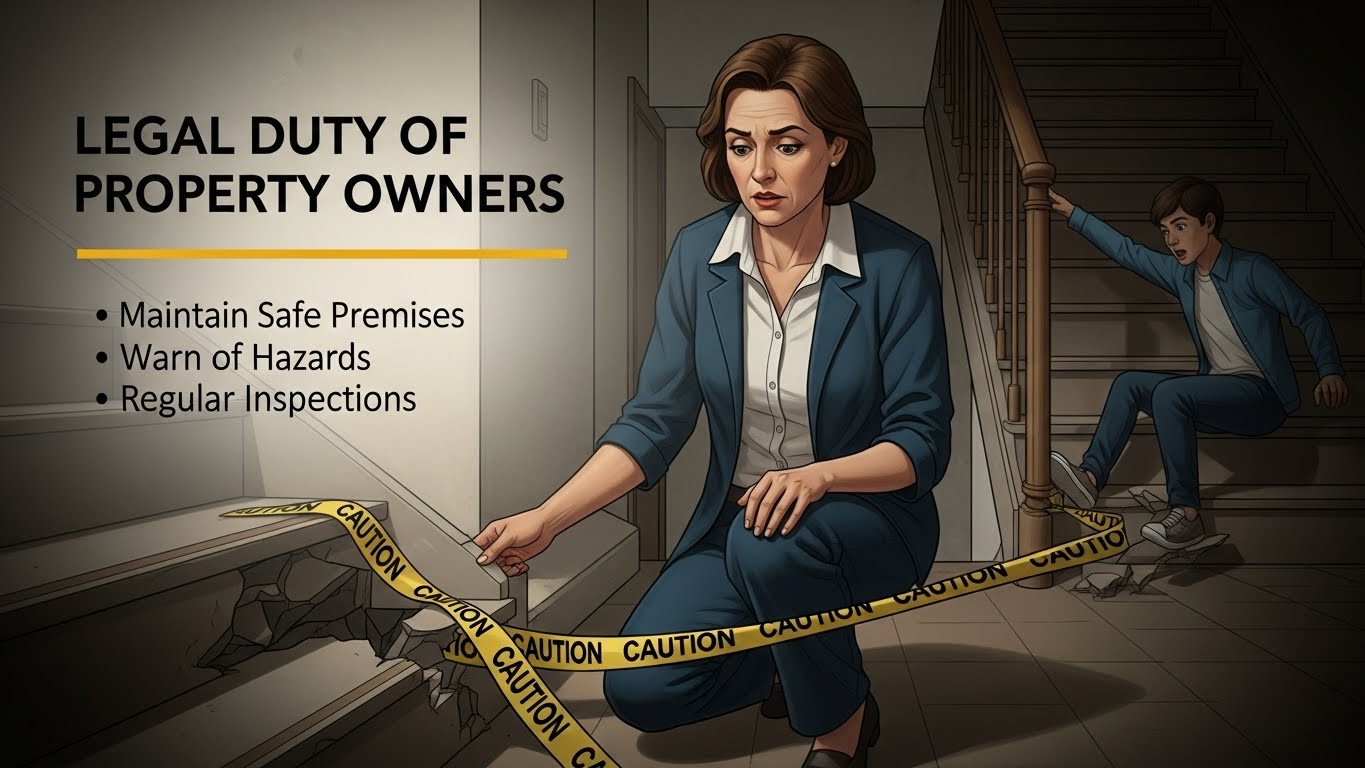
Legal Duty of Property Owners
Property owners have a legal responsibility to keep their premises reasonably safe for visitors. This responsibility, often referred to as the legal duty of care, forms the foundation of premises liability claims. When a property owner fails to meet this duty and someone gets hurt as a result, they may be held financially responsible for the damages.
This article explains the different types of legal duties, who is protected under the law, what owners must do to keep their properties safe, and what victims should know if they are injured due to unsafe conditions.
What Is the Legal Duty of Care?
The legal duty of care refers to the obligation property owners have to maintain safe environments and prevent foreseeable harm. This duty applies to:
- Homeowners
- Landlords
- Businesses
- Property managers
- Government entities
The level of responsibility depends on the type of visitor on the property. Understanding these classifications helps determine whether the owner may be liable for an injury.
Types of Visitors and Their Legal Protection
The law generally recognizes three types of visitors: invitees, licensees, and trespassers. Each category has a different level of protection.
Invitees
Invitees are people invited onto the property for business or mutual benefit, such as customers at a store or tenants in an apartment building. Property owners owe them the highest duty of care.
Duty to Invitees:
- Conduct regular inspections
- Repair dangerous conditions promptly
- Warn visitors about known hazards
Licensees
Licensees are people allowed on the property for social reasons, like friends visiting a home. Property owners must warn them about known dangers but are not required to inspect the property regularly.
Trespassers
Trespassers enter the property without permission. Owners usually owe them minimal duty, but exceptions exist—especially for children under the “attractive nuisance” doctrine.
Common Examples of Owner Negligence
Property owners can be considered negligent when they fail to correct unsafe conditions that cause injury. Common scenarios include:
- Wet or slippery floors
- Uneven sidewalks or flooring
- Poor lighting in hallways or parking lots
- Broken steps or railings
- Unsecured swimming pools
- Falling objects in stores
- Inadequate security measures
These hazards often lead to accidents such as slip and falls, assaults, dog bites, and property-related injuries.
Maintenance Responsibilities of Property Owners
Owners must take proactive steps to ensure their property is safe. Their responsibilities may include:
1. Inspecting the Property
Businesses and landlords should perform regular safety checks. This includes inspecting walkways, checking lighting, repairing broken fixtures, and identifying potential hazards.
2. Fixing Dangerous Conditions
Once an issue is identified, property owners must repair it within a reasonable time. Examples include fixing loose tiles, repairing cracked pavement, or replacing broken handrails.
3. Providing Adequate Warnings
If a hazard cannot be fixed immediately, the owner must warn visitors. Common warnings include:
- “Wet Floor” signs
- Temporary barricades
- Repair notices
4. Ensuring Proper Security
In some cases, owners must provide security measures to protect visitors from foreseeable harm. Examples include:
- Security cameras
- Proper lighting in parking lots
- Locked entrance points
Failure to provide these measures may lead to a negligent security claim.
How to Prove a Property Owner Breached Their Duty
To hold a property owner legally responsible, victims must show that the owner failed to meet their duty of care. This typically requires proving four key elements.
1. Duty of Care Existed
The victim must show they were legally on the property (invitee or licensee) and that the owner owed them a duty of care.
2. The Duty Was Breached
This means the owner failed to take reasonable steps to keep the property safe. Examples include not cleaning spilled liquids or ignoring reports of broken steps.
3. The Breach Caused the Injury
The unsafe condition must be directly linked to the accident. For example, a fall due to a wet floor with no warning sign.
4. The Victim Suffered Damages
Damages can include medical bills, lost income, pain and suffering, or long-term disability.
Evidence That Helps Prove Owner Negligence
Strong evidence increases the chances of winning a premises liability case. Useful forms of evidence include:
- Photos and videos of the hazard
- Witness statements
- Incident reports
- Maintenance logs
- Medical records
- Security camera footage
Steps to Take After an Injury on Someone’s Property
If you are hurt on a property, taking quick action helps protect your case.
1. Document the Scene
Take photos immediately before the hazard is fixed or cleaned up.
2. Report the Accident
Notify the property owner, manager, or staff. Ask for an incident report when possible.
3. Seek Medical Care
Even minor injuries should be evaluated. Medical records provide essential proof.
4. Avoid Giving Statements to Insurance Adjusters
Insurance companies may use your words to deny or minimize your claim.
5. Speak with a Premises Liability Attorney
An experienced attorney can help gather evidence, negotiate with insurers, and protect your legal rights.
Compensation Available in Premises Liability Claims
Victims may be entitled to compensation for:
- Medical expenses
- Lost wages
- Pain and suffering
- Emotional distress
- Disability or long-term impairment
- Wrongful death, if applicable
Related Articles
Property owners have a significant legal duty to ensure their premises are safe. When they fail to meet this obligation, victims have the right to pursue compensation and hold negligent owners accountable.
