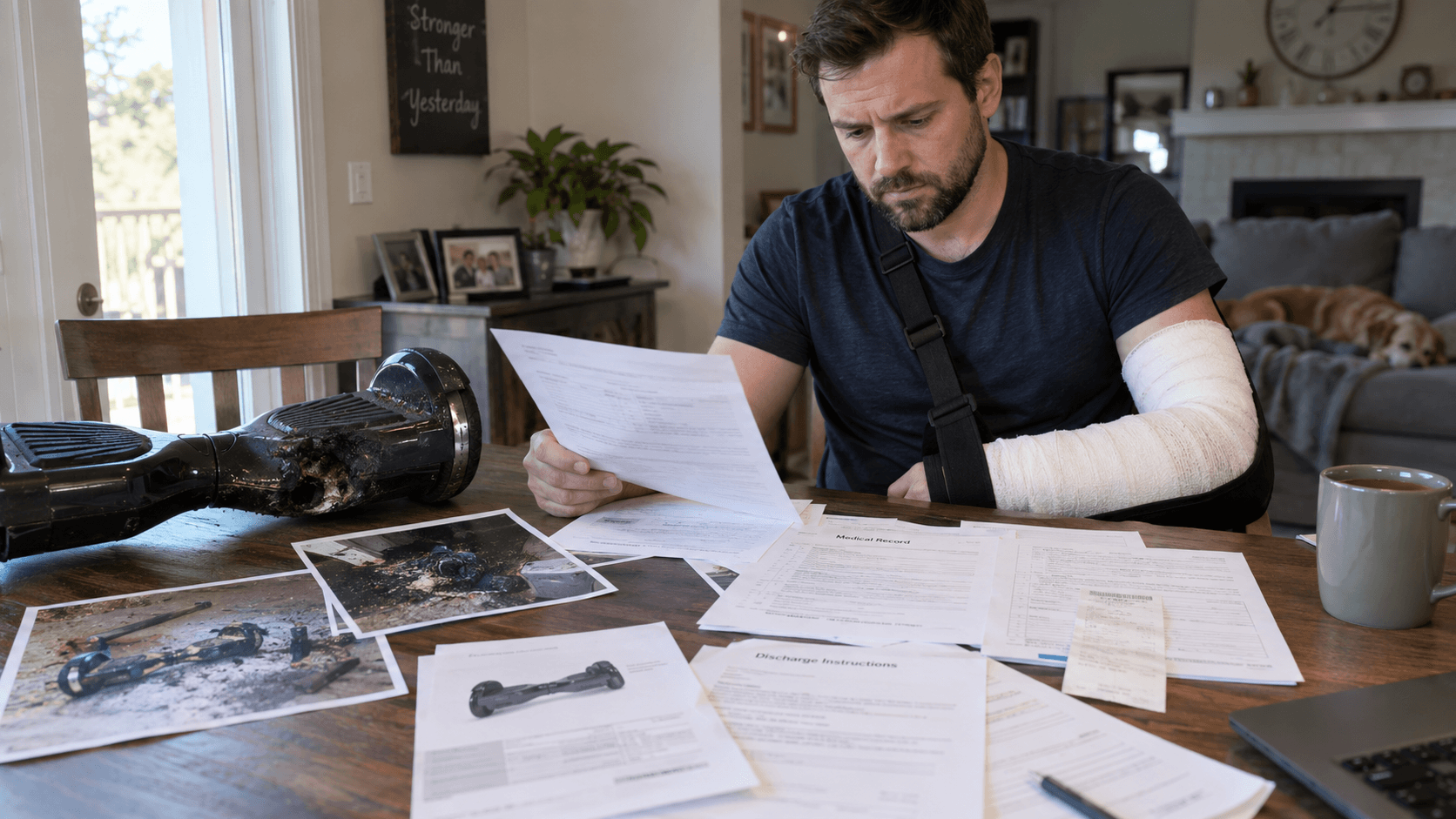
Hoverboards may not dominate headlines the way they did years ago, but lithium-ion battery safety remains a serious issue in 2026. Many hoverboards, also called self-balancing scooters, rely on compact rechargeable battery packs that can store a large amount of energy in a small space. When the battery, charger, wiring, or electrical system fails, the result can be more than a damaged device. A fire can cause burns, smoke inhalation, property loss, evacuation injuries, and long-term medical treatment.
This topic is especially relevant now because federal safety discussions around micromobility products continue to focus on lithium-ion batteries used in e-bikes, e-scooters, hoverboards, and similar devices. The Consumer Product Safety Commission micromobility safety center warns consumers about lithium-ion battery fires, safe charging, recalls, and proper disposal. For injury victims, the key question is not only what happened, but whether the fire was connected to a defective product, unsafe charger, poor warnings, negligent repair, or improper sale.
Why Hoverboard Battery Fires Still Matter
Hoverboards became widely known after reports of battery overheating, fires, smoke, and explosions. The CPSC previously announced recalls involving self-balancing scooters because lithium-ion battery packs could overheat and create fire hazards. One major CPSC hoverboard recall involved multiple companies and reports of overheating, sparking, smoking, fires, burn injuries, and property damage.
Although product standards and testing have improved, battery-powered mobility products still create risks when parts are poorly made, mislabeled, counterfeit, damaged, modified, or paired with the wrong charger. A consumer may buy a hoverboard online, use a replacement charger, purchase a used model, or rely on a seller’s safety claims without knowing whether the electrical system was properly tested.
That is why hoverboard battery fire injury claims often fall under product liability. If the device was unreasonably dangerous because of its design, manufacturing, labeling, or warnings, an injured person may need to examine the product’s history, purchase records, battery type, charger compatibility, repair records, and recall status. For a broader breakdown, see this guide on types of product defects.
How Hoverboard Battery Fires Can Happen
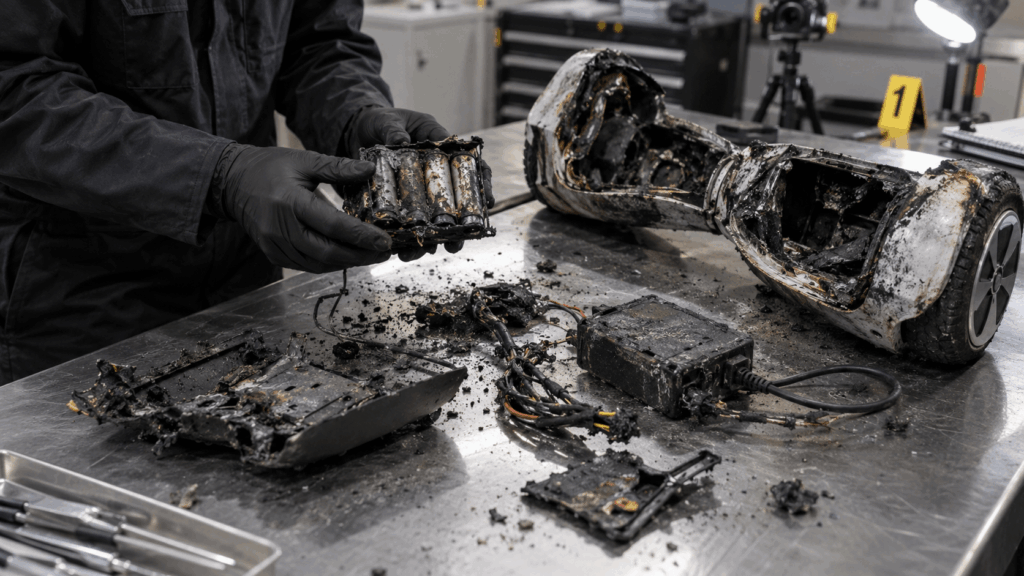
A hoverboard battery fire may begin during charging, while the device is being used, or after the board has been stored. Lithium-ion batteries can fail when internal cells overheat, wiring shorts, insulation breaks down, or a charger supplies the wrong voltage. Damage from impact, water exposure, low-quality cells, poor assembly, or unauthorized repairs can also increase the risk.
The CPSC’s 2026 proposed lithium-ion battery safety standard focuses on micromobility products because thermal runaway can lead to fires, explosions, gas release, burns, overheating, and smoke inhalation. In plain terms, thermal runaway can happen when one failing battery cell heats nearby cells, causing a fast chain reaction that is difficult to stop once it begins.
In an injury claim, the exact cause matters. A fire that starts because of a manufacturing defect may point toward the manufacturer. A fire caused by a mislabeled charger may involve the seller, importer, or distributor. A fire linked to a repair shop’s battery replacement may involve negligent service. A fire connected to unclear warnings may raise a failure-to-warn issue.
Who May Be Liable After a Hoverboard Fire?
Liability depends on the facts, but several parties may be reviewed after a hoverboard battery fire. The manufacturer may be responsible if the hoverboard’s electrical system, battery pack, or charger was defectively designed. A parts supplier may be involved if the battery cells, wiring, circuit board, or charging component failed. An importer or distributor may be responsible if it placed an unsafe product into the stream of commerce.
A retailer may also matter, especially when the product was sold with misleading safety claims, missing warnings, recalled parts, or incompatible charging equipment. Online marketplaces can add another layer of complexity because the injured person may need to identify the actual seller, shipment source, manufacturer, and warranty documents.
Repair shops and battery replacement services may be reviewed if they installed the wrong battery pack, used uncertified parts, failed to inspect wiring, or returned a damaged device to the customer. In some cases, a landlord, school, workplace, or business may be involved if it allowed unsafe charging practices or ignored known fire hazards on the property.
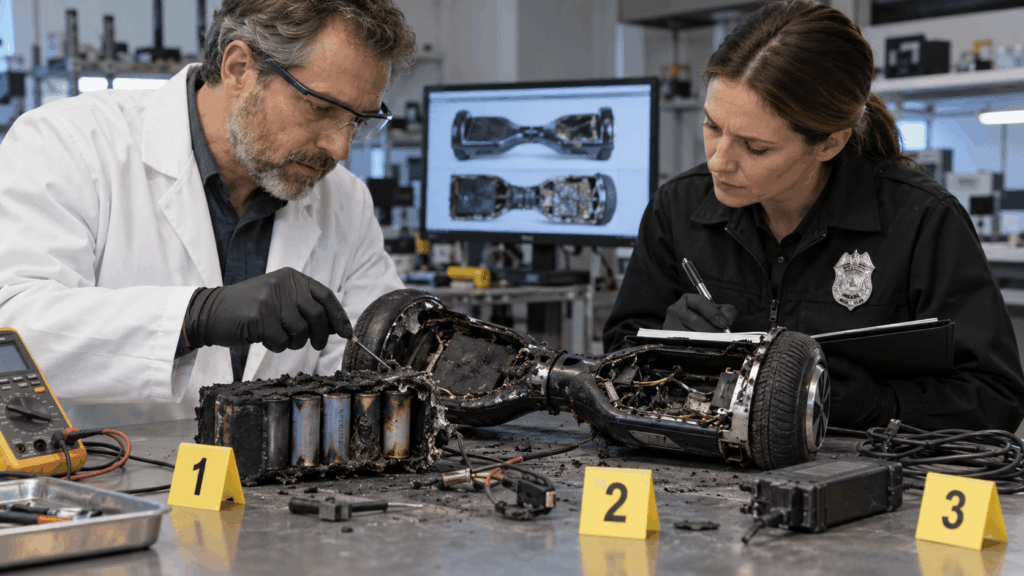
Expert analysis is often important in these cases. Electrical engineers, fire investigators, battery experts, and product-safety specialists may examine the burned device, charger, wiring, scene photos, and purchase history. To understand why expert review can matter, read this article on expert witnesses in injury cases.
Why UL 2272 Certification May Matter
Hoverboard safety discussions often mention UL 2272, a safety standard for electrical systems in personal e-mobility devices. The UL 2272 standard covers electrical drive train systems, battery systems, circuits, and charger combinations for personal e-mobility devices.
Certification does not automatically prove that a product can never fail, and lack of certification does not automatically prove liability. However, certification claims can become evidence. If a seller advertised a hoverboard as certified, an attorney or expert may verify whether that claim was accurate. If a product had no recognized safety testing, that may become part of the investigation into whether the product was reasonably safe for consumers.
Consumers should also be careful with replacement chargers and batteries. A hoverboard that originally came with one charger may not be safe with a different charger, even if the plug fits. In an injury claim, the defense may argue that the consumer used the wrong charger or modified the product. The injured person may need purchase receipts, photos, packaging, manuals, and repair records to show how the product was used.
What Injuries Can Result From a Hoverboard Battery Fire?
Hoverboard battery fires can cause several types of harm. Burns may occur when a person tries to move the device, unplug the charger, escape the room, or extinguish the fire. Smoke inhalation may happen even when visible burns are limited. Some people develop breathing problems, throat irritation, coughing, dizziness, headaches, or worsening asthma symptoms after exposure to battery fire smoke.
Other injuries may occur during evacuation, including falls, cuts from broken glass, sprains, or impact injuries. Property damage can also affect the claim because fire-damaged homes may involve temporary housing, cleanup, lost personal items, and insurance disputes. If symptoms appear later, this guide on delayed injury symptoms after an accident may be helpful.
Medical documentation is important. A person injured by a hoverboard fire should keep emergency room records, burn-treatment notes, follow-up appointments, prescriptions, respiratory evaluations, photos of injuries, and work-restriction notes. These records can help connect the injury to the fire and show the severity of the harm.
Evidence To Preserve After a Hoverboard Fire
After any battery fire, evidence can disappear quickly. The burned hoverboard, battery pack, charger, packaging, receipt, instruction manual, warranty card, repair invoice, and online order confirmation should be saved if it is safe to do so. The device should not be thrown away, repaired, cleaned, or disassembled without guidance because it may be the central evidence in the claim.
Photos and videos are also important. Take pictures of the charging location, outlet, extension cords, smoke damage, burn patterns, damaged furniture, product labels, serial numbers, and the charger connection. If firefighters responded, request the incident report. If a property manager, school, or workplace documented the fire, ask for copies of their report as well.
Digital evidence may also help. Online order histories, seller messages, warranty emails, recall notices, payment records, and photos from before the fire can help identify the product and establish its condition. This is similar to other modern injury claims where digital records can shape liability, as explained in this article on AI and digital evidence in personal injury claims.
What If the Hoverboard Was Recalled?
A recall can be important, but it does not automatically decide the entire case. A recalled product may support an argument that a known hazard existed, especially if the recall involved overheating, smoke, fire, or explosion risks. For example, CPSC recall records include hoverboard-related battery fire hazards, including a Razor Hovertrax battery pack recall involving overheating, smoking, fire, and explosion risks.
However, a claim still requires proof that the recalled product was involved, the injured person used it in a reasonably foreseeable way, and the defect contributed to the injury. If the product was never recalled, that does not mean there is no claim. Some defective products are identified only after repeated incidents, expert testing, or litigation.
Consumers can search for recalls through official sources and should follow disposal instructions carefully. The EPA’s lithium-ion battery recycling guidance explains why used lithium-ion batteries should be handled differently from ordinary trash because they can create fire risks.
Insurance Issues After a Hoverboard Fire
Insurance may become complicated. A homeowner’s or renter’s policy may cover property damage, but the insurer may investigate whether the device, charger, or user conduct caused the fire. Medical bills may involve health insurance, liability insurance, or a product claim against a manufacturer or seller.
If an insurer offers a fast settlement, the injured person should be careful before signing a release. A settlement may include medical bills, lost income, pain and suffering, property damage, future treatment, and other losses. This guide on signs your injury claim is being lowballed explains why early offers may not reflect the full value of a claim.
Liability disputes may also involve comparative fault. A company may argue that the consumer ignored warnings, used an aftermarket charger, charged the hoverboard overnight, or continued using a damaged product. Comparative fault rules vary by state, but the general concept is explained in this article on comparative negligence and injury claims.
What To Do After a Hoverboard Battery Fire
First, get medical attention if anyone inhaled smoke, suffered burns, or developed symptoms after the fire. Second, report the incident to the fire department, property owner, and insurance company when appropriate. Third, preserve the hoverboard, charger, battery, packaging, receipts, and photos. Fourth, check whether the product was subject to a recall or safety warning.
It may also help to document how the product was purchased and used. Write down when it was bought, where it was bought, whether it came with the charger, whether any repairs were performed, and where it was charging when the fire began. If there were witnesses, save their names and contact information.
Hoverboard battery fire injury claims can involve technical evidence, multiple companies, and complex insurance issues. The stronger the documentation, the easier it may be to identify whether the fire was caused by a defective battery, unsafe charger, poor warnings, negligent repair, or another preventable hazard.
Conclusion
Hoverboard battery fire injury claims remain relevant in 2026 because lithium-ion battery safety is still a major concern across micromobility products. A burned hoverboard is not just damaged property — it may be critical evidence. Victims should preserve the device, charger, purchase records, medical documents, photos, and fire reports before evidence is lost.
If the fire caused burns, smoke inhalation, evacuation injuries, or major property loss, the claim may require a careful review of product defects, recalls, charger compatibility, safety warnings, and insurance coverage. For more information about how damages may be evaluated, see this guide on pain and suffering damages in injury cases.
