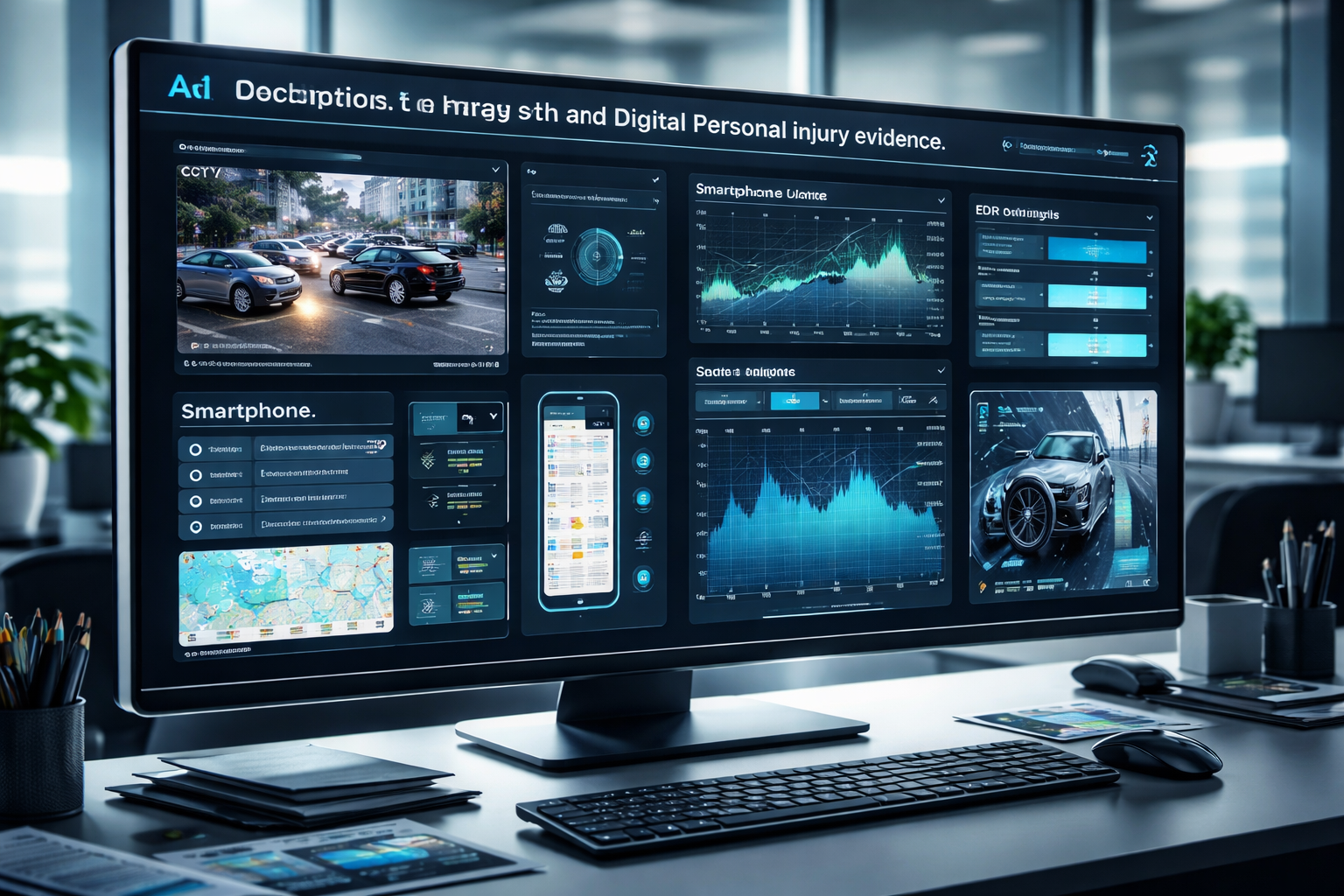
Personal injury law continues to evolve rapidly as technology reshapes how cases are investigated, evaluated, and resolved. One of the most significant developments in 2026 is the growing role of artificial intelligence (AI) and digital evidence in personal injury claims. These tools are now part of regular practice for both attorneys and insurers, affecting everything from evidence collection to settlement strategies.
This post explains how AI and digital evidence are impacting personal injury claims, why victims should understand these trends, and how to protect their rights in an increasingly tech-driven legal environment.
What Is AI in Personal Injury Law?
Artificial intelligence refers to advanced computer algorithms that perform tasks traditionally done by humans. In personal injury law, AI affects various aspects of case handling:
- Reviewing medical records and building treatment chronologies
- Analyzing accident data, sensor logs, and reconstruction results
- Predicting case outcomes based on large data sets
- Automating routine legal research and document organization
Reports show that approximately 37% of personal injury legal practices now use AI tools for document review, case strategy, and medical record analysis, with adoption expected to grow rapidly.

Why AI Matters for Personal Injury Victims
AI changes the timeline and depth of evidence analysis. What used to take weeks of manual review can now be completed in hours. This matters because early case evaluation often determines how quickly claims settle and whether litigation becomes necessary.
AI can quickly extract key facts from thousands of pages of medical records, highlight inconsistencies in insurer reports, and identify patterns that support causation and liability. For victims, this means stronger case files and less risk that critical evidence is overlooked.
Digital Evidence Is Now Everywhere
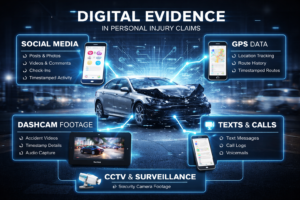
Modern personal injury claims increasingly rely on digital evidence that goes far beyond eyewitness testimony and police reports. Digital evidence includes:
- Surveillance and dashcam footage
- Smartphone data and GPS records
- Vehicle event data recorder (EDR)/“black box” logs
- Security camera recordings and drone footage
- Wearable device health data
- Social media posts and messages
Digital evidence is transforming how liability is established. Courts and insurers now expect this evidence to be included as part of routine case preparation.
AI and Insurance Company Tactics
Insurance companies are also using AI — especially to triage claims and identify potential fraud. AI can flag inconsistent treatment patterns, unexpected injuries, questionable medical billing, and other red flags insurers use to minimize payouts.
If you want to protect yourself and your claim, it’s critical to:
- Get all medical records early
- Preserve digital data quickly
- Share records with your attorney promptly
For example, structured AI tools can help confirm the timeline between the accident and injuries, which can be crucial when insurers try to argue that injuries were pre-existing.
The Role of Social Media and Digital Evidence
Social media continues to be a double‑edged sword in personal injury cases. While posts can help show how injuries impact daily life, they can also be used against victims. Insurers regularly scan platforms like Facebook, Instagram, and YouTube for content that seems inconsistent with injury claims.
Avoid posting anything that could be misconstrued. For more, see how social media can hurt your injury claim.
Use of social media evidence in trials and negotiations has grown, and defense teams increasingly rely on this digital footprint to challenge claims.
AI at Every Stage of the Claim
AI assists at multiple points during a personal injury claim:
- Intake and Triage: AI helps identify potentially strong cases earlier.
- Medical Review: Tools extract diagnoses, treatments, and prognosis from records.
- Liability Analysis: Predictive analytics compare similar cases and suggest likely outcomes.
- Settlement Projections: AI models help estimate fair settlement ranges.
These technologies don’t replace lawyers, but they help lawyers work faster and more effectively. They strengthen the ability to see a clear picture of your injuries, causation, and future needs — especially when evidence is complex or extensive.
Digital Evidence Preservation Tips
Preserving digital evidence is critical. If you are involved in a crash or injury, consider these steps:
- Take photos and videos of the scene right away.
- Preserve entire phone records, not just screenshots.
- Save all communications with insurers.
- Secure dashcam, CCTV, and EDR data before it’s overwritten.
- Document any digital tracking (like GPS) near the time of the incident.
Proper preservation strengthens your claim and prevents defense attorneys from arguing that data was lost or mishandled.
How Courts View AI and Digital Evidence
Courts across the country now routinely allow digital evidence and AI‑generated analyses, so long as the source is verifiable and reliable. Judges treat these data points the same as other types of evidence — but they may require expert testimony to interpret complex AI outputs or technical logs from vehicles or devices.
For example, a vehicle’s onboard “black box” event data recorder can show speed, braking, and steering inputs just before a crash. When paired with AI analysis, these logs can help reconstruct the accident with precision.
AI Is Here to Stay
AI isn’t a fad. It’s becoming a central part of how personal injury claims are analyzed and resolved. Lawyers who adopt these tools gain a strategic advantage — and clients benefit from stronger cases backed by detailed evidence insights. But you also need an attorney who understands how to interpret and present this kind of evidence effectively in negotiations or court.
If you’d like to understand more about how modern claims are evaluated, see our guide on how long personal injury settlements take.
Conclusion
The intersection of AI and digital evidence with personal injury law is one of the most important developments of 2026. These tools bring more clarity, speed, and predictability to personal injury claims — but they also require victims to be proactive about preserving data and working with experienced attorneys who know how to use technology to their advantage.
If you or someone you care about has been injured, understanding these trends can help you protect your rights and build a stronger case with the evidence needed to get fair results in today’s digital age.
For more related information, check out our posts on “How Self-Driving Car Technology Affects Insurance and Liability” and when to reject a settlement offer.
