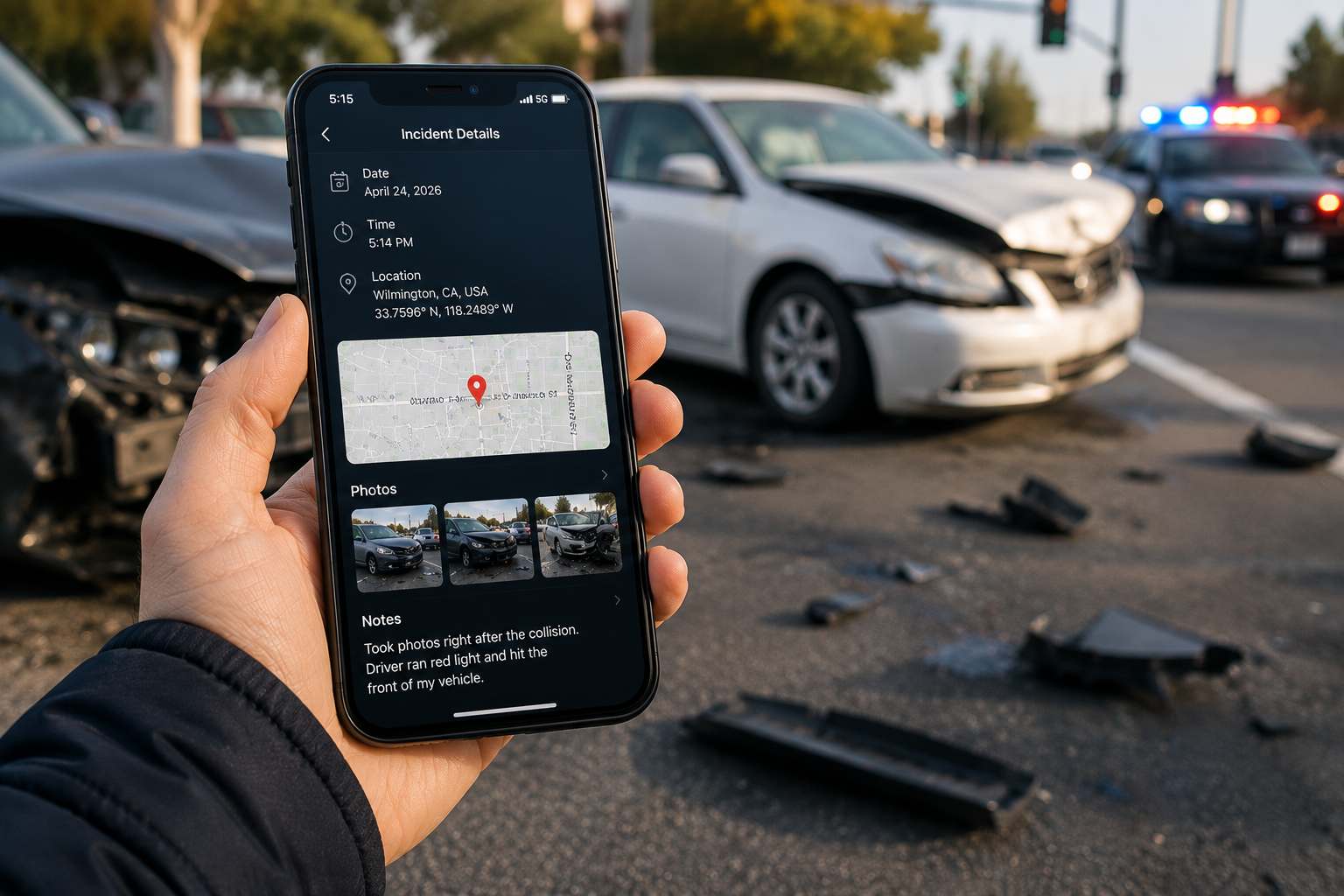
In 2026, smartphones and wearable devices have become key sources of evidence in personal injury claims. Devices such as smartphones, smartwatches, and fitness trackers collect detailed, time-stamped data that can reconstruct accident scenarios, confirm timelines, and establish liability.
According to recent legal technology reports, over 95% of investigators now consider digital device evidence essential in modern personal injury litigation. These records often complement traditional evidence like police reports, medical records, and eyewitness testimony.
What Data Can Smartphones Provide?
Modern smartphones collect and store:
- GPS location and movement history
- Time-stamped photos and videos
- App usage logs and messaging history
- Sensor data including motion and orientation
- Cloud backups of critical files and communications
This data is particularly useful for reconstructing the sequence of events surrounding a crash or workplace accident. For instance, GPS logs can verify a person’s location minutes before an accident, while photos or video capture the scene as it occurred.
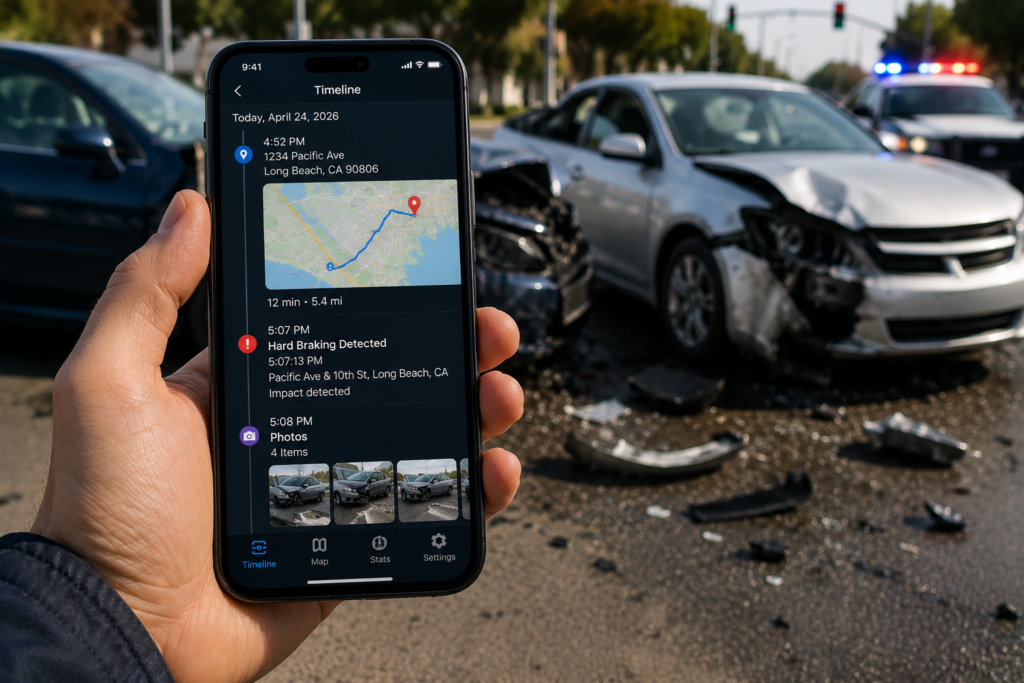
Wearables and Smart Device Data
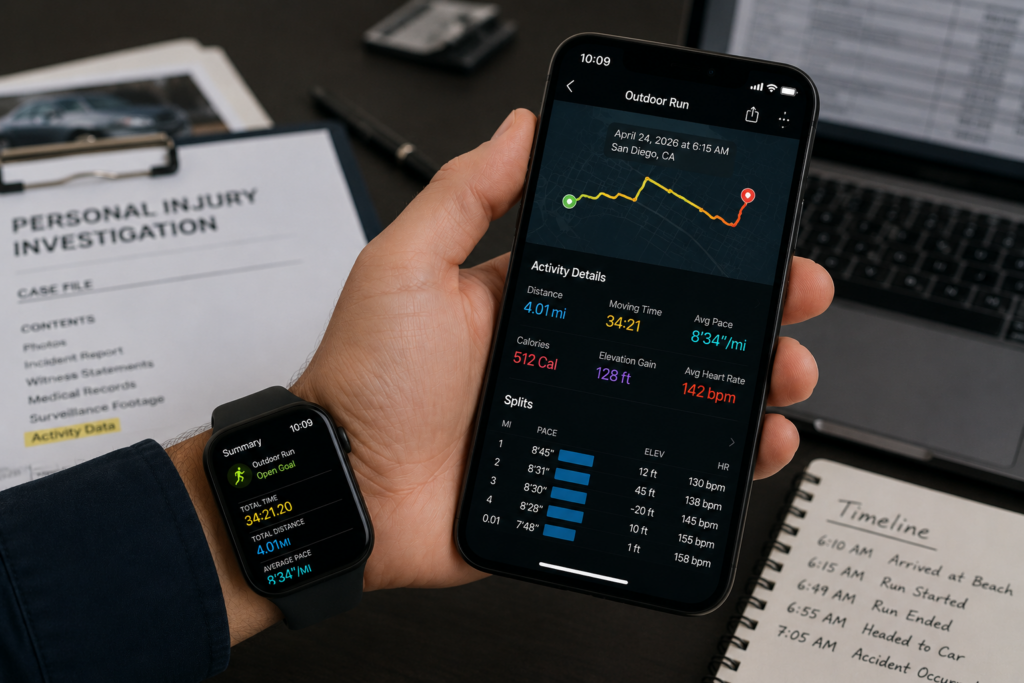
Wearable devices, including smartwatches and fitness trackers, provide additional evidence such as:
- Heart rate and impact detection during accidents
- Sleep and activity logs reflecting injury impact
- Step tracking, accelerometer, and gyroscope data indicating movements before, during, and after an incident
This evidence can corroborate medical reports, help quantify the severity of injuries, and support claims for damages or lost wages.
How Attorneys Use Digital Device Evidence
Lawyers increasingly integrate smartphone and wearable data into their case strategy. Common uses include:
- Confirming accident timelines using GPS and timestamped media
- Corroborating injury claims with physiological data
- Reconstructing accident sequences via messaging history, app records, and cloud backups
For more complex cases, digital forensic experts extract and authenticate this data to ensure it meets legal standards and is admissible in court. Proper handling is critical because data may otherwise be challenged as tampered or incomplete.
Benefits in Personal Injury Cases
Using smartphone and wearable evidence offers several advantages:
- Objective Proof: Unlike eyewitness accounts, sensor and GPS data are less subjective.
- Accurate Timelines: Time-stamped logs clearly define when events occurred.
- Supports Medical Claims: Heart rate and activity tracking can validate injury severity.
- Strengthens Settlement Negotiations: Clear evidence often encourages insurers to settle fairly.
Learn how this evidence complements other forms of proof in cases such as self-driving car crashes.
Admissibility and Privacy Considerations
To be legally admissible, digital evidence must be authenticated. This often involves:
- Working with certified forensic experts
- Preserving metadata and timestamps
- Following chain-of-custody procedures
- Obtaining releases or court orders for sensitive data
Attorneys must balance privacy with evidence needs, ensuring only relevant data is presented in court.
External Resources
- Forensic Focus: Smartphone Evidence Trends
- Types of Evidence in Personal Injury Cases
- Wearable Tech as Evidence
- Digital Forensics Legal Standards
- Digital Evidence and Case Outcomes
Conclusion
Smartphones and wearables are reshaping personal injury claims in 2026. When collected and presented correctly, this digital evidence provides objective, accurate, and compelling proof. Attorneys who understand how to integrate these data sources can significantly strengthen claims, improve settlement outcomes, and prepare cases for trial with confidence.
