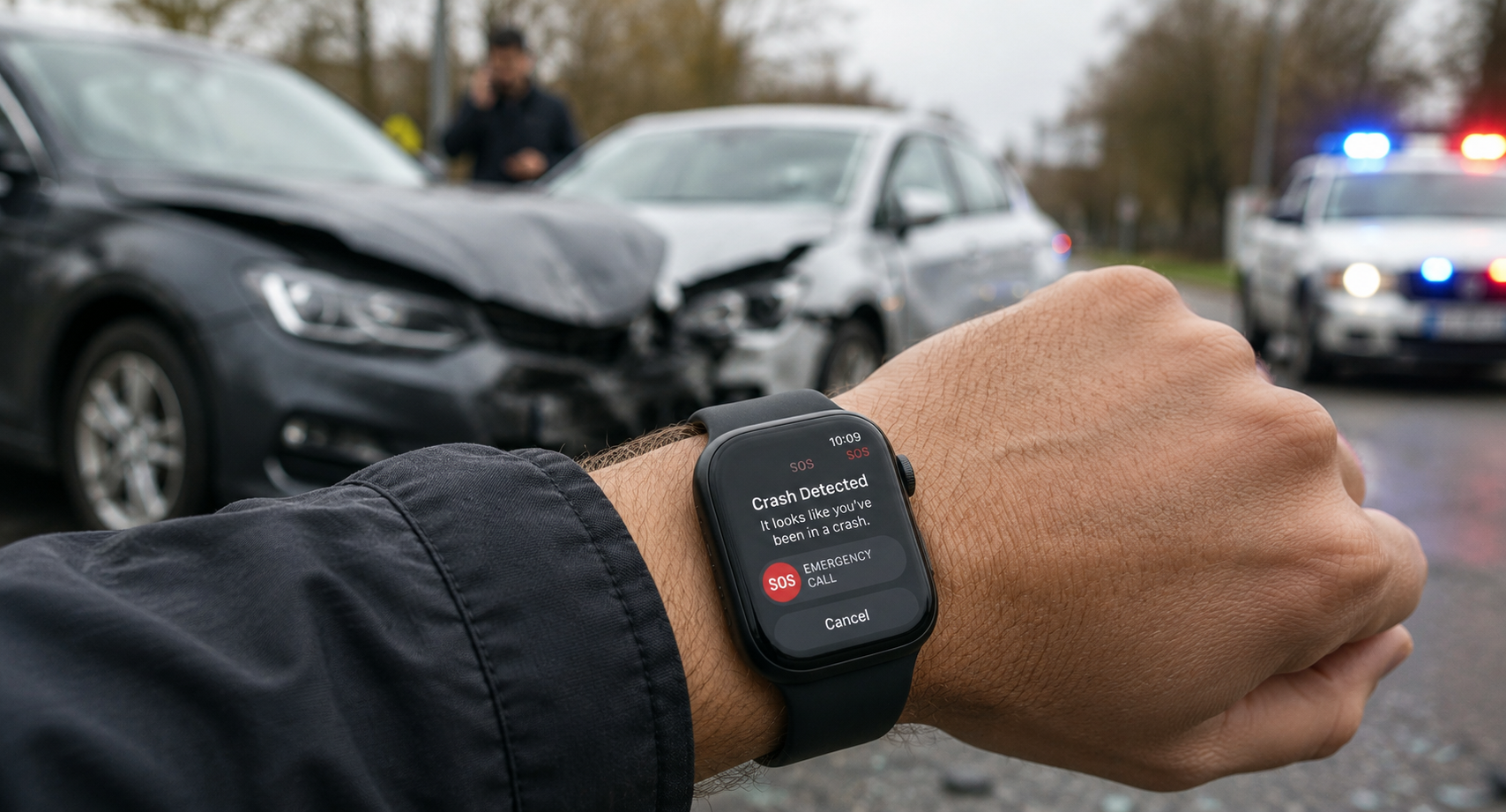
Wearable technology is changing how personal injury claims are investigated in 2026. Devices like smartwatches, fitness trackers, and health-monitoring wearables now collect detailed information about movement, heart rate, sleep patterns, GPS activity, and physical condition. This data is increasingly being used as evidence in accident and injury claims.
What began as consumer fitness technology has evolved into a valuable legal tool. Attorneys, insurers, medical professionals, and courts now review wearable device data to evaluate injury severity, establish timelines, and challenge or support claims.
What Wearable Devices Can Track
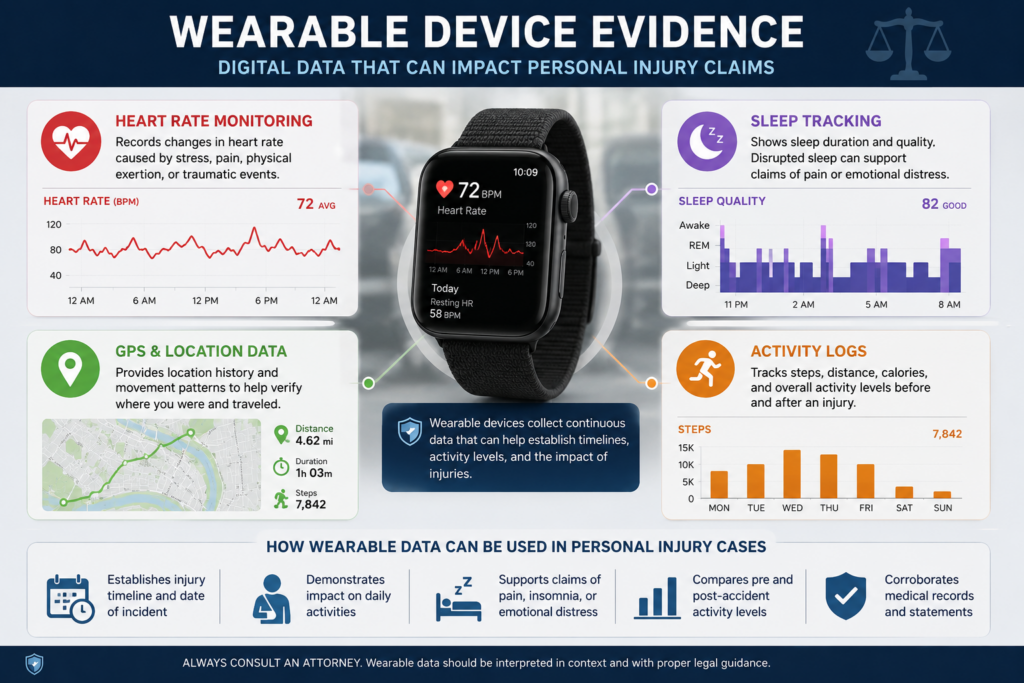
Modern wearable devices collect far more than simple step counts. Depending on the device, wearable technology may record:
- Heart rate and heart rhythm changes
- Sleep disturbances
- GPS location history
- Physical activity levels
- Fall detection and crash alerts
- Blood oxygen levels
- Stress and recovery metrics
Popular devices include the Apple Watch, Fitbit, Garmin, and Samsung Galaxy Watch.
This information may become highly relevant after a car accident, slip and fall, workplace injury, or pedestrian accident.
How Wearable Devices Collect Evidence
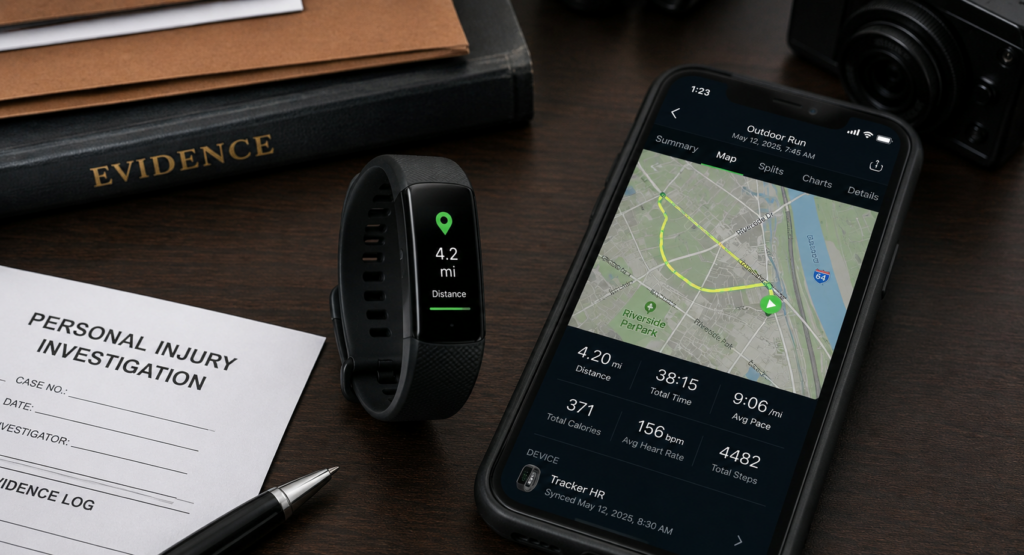
Wearable devices create digital records automatically throughout the day. This continuous tracking can help establish what happened before, during, and after an accident.
For example, sudden heart rate spikes, abrupt movement changes, or crash detection alerts may help support the timing and severity of an accident. GPS tracking may confirm where a person was located during the incident.
Some smartwatches even automatically contact emergency services after detecting severe impacts or falls.
Wearable evidence may also support claims involving delayed injuries. Learn more about delayed injury symptoms after an accident.
How Attorneys Use Wearable Data
Attorneys may use wearable data to strengthen personal injury claims in several ways:
- Showing reduced physical activity after an injury
- Documenting sleep disruption caused by pain
- Supporting emotional distress claims through biometric changes
- Establishing injury timelines
- Confirming physical limitations during recovery
For example, if a victim regularly averaged 10,000 daily steps before an accident but only managed 1,000 afterward, the data may help demonstrate the injury’s impact on daily life.
Courts increasingly allow digital evidence when it can be properly authenticated. According to the American Bar Association, digital evidence is becoming a larger component of modern litigation.
How Insurance Companies Use Wearable Data
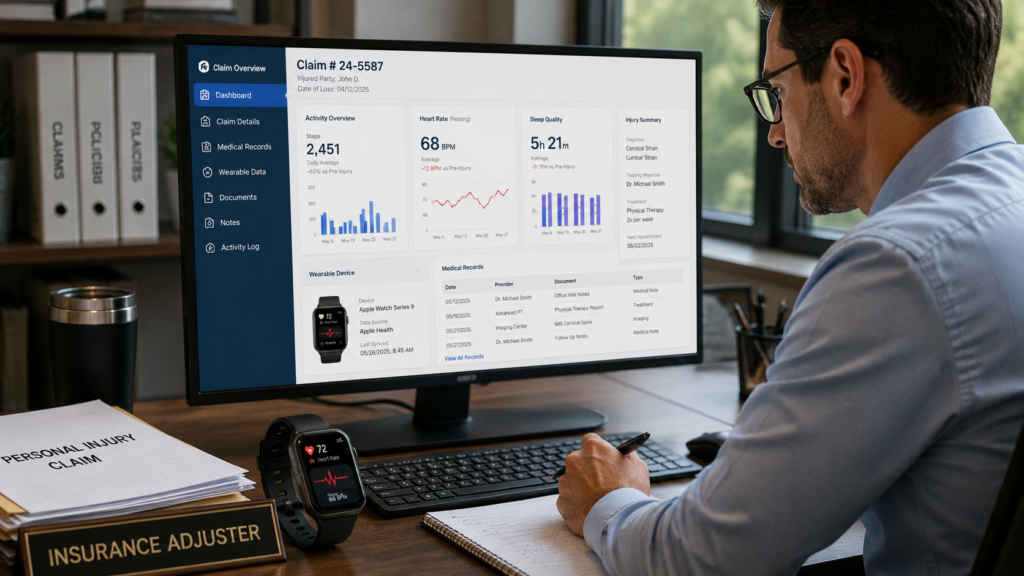
Insurance companies may also request wearable data during injury investigations. In some cases, insurers attempt to use this information to dispute injury severity or challenge claims.
For instance, an insurance company may compare claimed physical limitations against wearable activity logs. If someone reports severe mobility issues but wearable records show intense physical activity, insurers may question credibility.
This is similar to how insurers use social media posts in injury investigations. Read more about how social media can affect a personal injury claim.
Because wearable records can sometimes be misunderstood or taken out of context, it is important to review this information carefully before sharing it during litigation.
Privacy Concerns With Wearable Data
Wearable technology raises important privacy questions. Many people do not realize how much information these devices store or how that data may later be accessed.
Depending on the circumstances, wearable data may be requested during discovery in a lawsuit. Courts may allow access if the information is directly relevant to the injuries being claimed.
Privacy laws continue evolving as wearable technology becomes more common. The Federal Trade Commission and healthcare privacy regulators continue monitoring how companies collect and store health-related information.
Wearable Data in Car Accident Cases
Car accident claims increasingly involve wearable evidence alongside vehicle data, surveillance footage, and smartphone records.
For example, smartwatch crash detection may confirm the exact time of impact. GPS records may help reconstruct vehicle movement before the collision.
Wearable data may become especially valuable in disputed liability cases where witness accounts conflict.
You can also read our guide on who may be liable after a self-driving car crash.
Can Wearable Data Be Used in Court?
Yes. Courts increasingly accept wearable device evidence when it is properly authenticated and relevant to the case.
However, wearable data alone usually does not decide a claim. Instead, it is often combined with:
- Medical records
- Police reports
- Expert testimony
- Accident reconstruction evidence
- Surveillance footage
Medical experts may help explain biometric changes shown by wearable devices. Attorneys may also work with digital forensics experts to verify the accuracy of the data.
How Victims Should Protect Wearable Evidence
If you are injured in an accident and use a wearable device, preserving your records may help protect your claim.
Helpful steps include:
- Do not delete health or activity data
- Back up device information immediately
- Save crash alerts or emergency notifications
- Preserve GPS tracking history
- Document changes in physical activity after the injury
Victims should also avoid sharing wearable screenshots publicly online.
For additional guidance, see our article on when to reject a personal injury settlement offer.
The Future of Wearable Evidence
Wearable technology continues evolving rapidly. New devices now monitor hydration, blood pressure, fatigue levels, and even emotional stress markers.
As artificial intelligence and health tracking improve, wearable evidence may become even more detailed in personal injury litigation.
Legal professionals expect wearable evidence to become increasingly common in cases involving:
- Car accidents
- Workplace injuries
- Slip and fall accidents
- Pedestrian accidents
- Wrongful death claims
Conclusion
Wearable devices are reshaping personal injury investigations by providing continuous digital evidence about a person’s health, movement, and physical condition. While this technology may strengthen injury claims, it can also create new legal and privacy challenges.
Understanding how wearable evidence works may help injury victims better protect their rights and preserve valuable information after an accident.
As technology continues advancing, wearable device evidence may become one of the most important forms of digital evidence in modern personal injury law.
