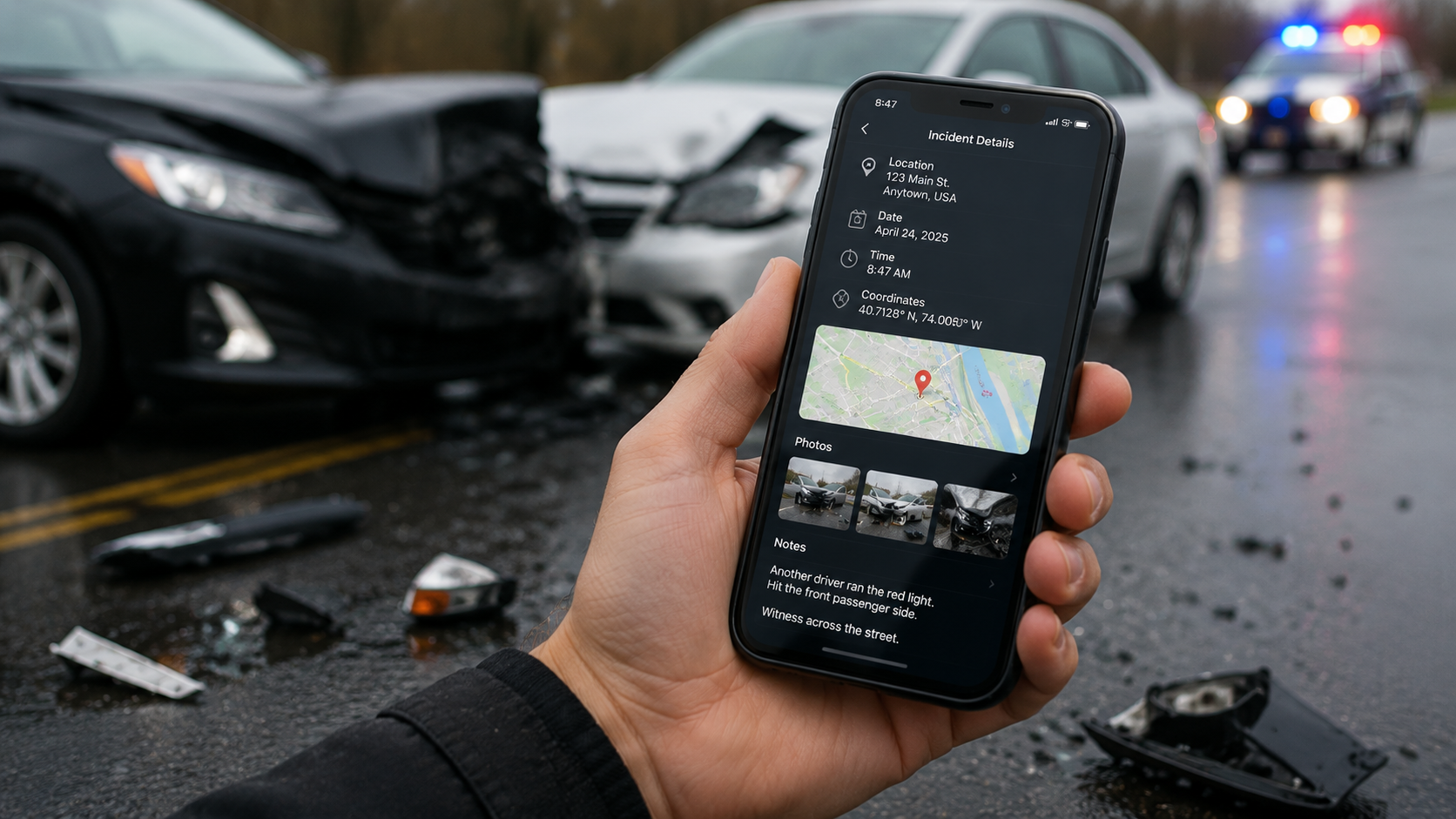
In 2026, smartphones have become one of the most important sources of evidence in personal injury litigation. Devices that people carry in their pockets every day now store a wealth of data that can help reconstruct events, confirm timelines, and establish liability after an accident.
New industry research shows smartphones are cited as the top source of digital evidence in modern investigations, with **97% of practitioners identifying phone data as critical in investigations**.
What Smartphone Data Can Reveal
Smartphones record more than just calls and text messages. Modern phones capture:
- GPS location and movement history
- Timestamps on photos and videos
- App usage logs and messaging data
- Sensor data including motion and orientation
- Cloud storage backups of evidence
These digital fingerprints can help attorneys and investigators recreate what happened before, during, and after an accident. For example:
- GPS data can place a person at the scene and show routes and speed patterns
- Photos and videos can document visible injuries, road conditions, and traffic signals
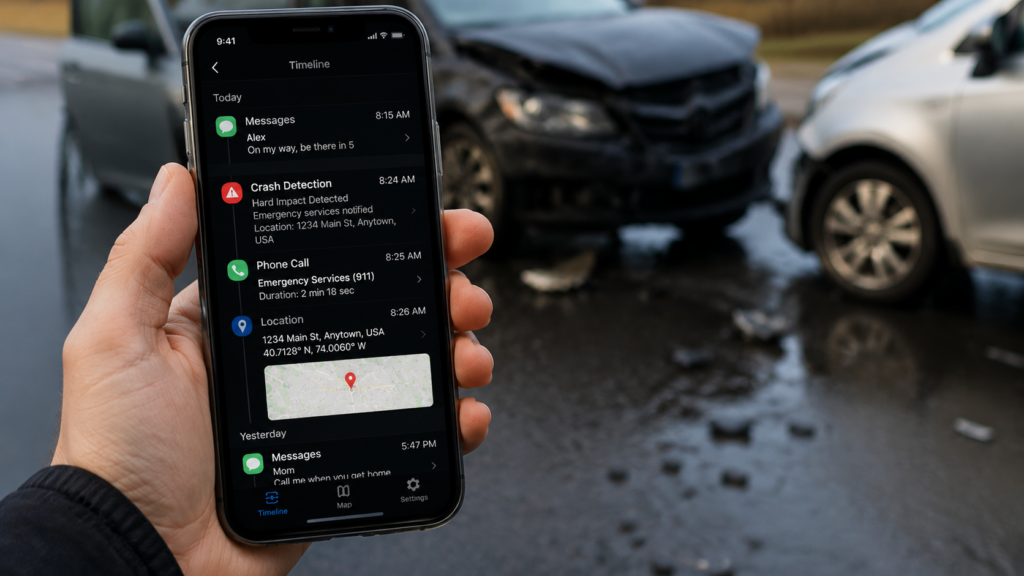
- App histories can show ride‑share routes, emergency calls, or navigation behavior
Together, this data provides a comprehensive, time‑stamped record of events that may be stronger than eyewitness testimony alone.
Smartphones vs. Traditional Evidence
Traditionally, personal injury claims relied on police reports, medical records, and eyewitness accounts. While these are still valuable, smartphone evidence adds an additional layer of objectivity and detail that was previously unavailable.
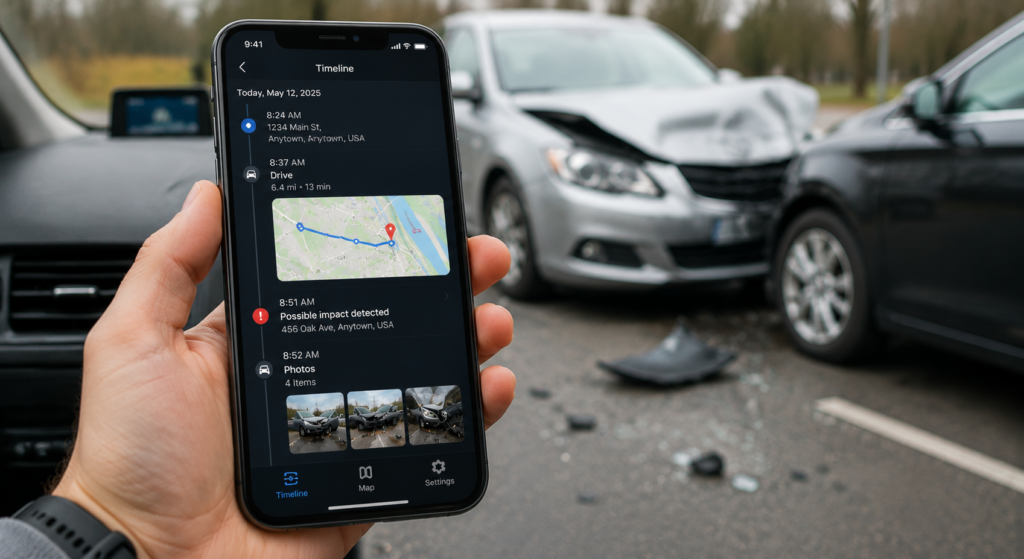
For instance, police reports may record where an officer arrived, but smartphone GPS logs can show where a person was *minutes before* the crash. Photos taken at the scene may help corroborate stories of impact, road hazards, or weather conditions. And video recordings — even short clips — can capture critical moments or angles that human witnesses miss.
Examples of Smartphone Evidence in Claims
Some common types of smartphone evidence used in personal injury claims include:
- Timestamped Photos: A picture of the crash scene with a timestamp can support your narrative about what happened.
- Dashcam App Recordings: Some drivers record video using smartphone apps, which can show precise visual evidence of impact.
- GPS and Movement Data: Reviewing location history from Google Maps or Apple Maps can help establish accident timing and routes.
- Incident‑Related Communications: Messages, calls, or ride‑share confirmations can help show intent, direction, and activity around the time of the injury.
These forms of evidence are increasingly considered reliable because they are difficult to manipulate once securely stored or backed up. When authenticated, courts may view them as contemporaneous records with high evidentiary value.
How Attorneys Use Smartphone Evidence
Personal injury attorneys now regularly request and analyze smartphone data during case preparation. This process often includes:
- Collecting GPS location history around the time of the accident
- Retrieving photos and videos with timestamps
- Examining ride‑share histories or transportation app records
- Collaborating with digital forensics experts when data is complex
Smartphone evidence is especially useful when liability is disputed, or when traditional documentation leaves gaps in the sequence of events. For example, GPS data might contradict a defense theory about a driver’s route or behavior just before a collision.
Learn how digital records can affect other forms of evidence in your case, such as how social media posts can impact your injury claim. Read more about social media risks.
Smartphone Evidence and Insurance Companies
Insurance adjusters are also aware of the power of smartphone evidence. Some insurers may request access to phone data during the investigation phase to verify injury timelines or activity levels.
This can cut both ways in a case. Valid smartphone evidence can strengthen your claim by showing consistent injury impact patterns or corroborating your version of events. Conversely, insurers may look for anomalies or inconsistencies in data to challenge your accusations — for example, showing activity that seems inconsistent with claimed limitations.
That’s why it’s important to work with an attorney who understands how to gather, interpret, and present smartphone data effectively. For tips on preparing for negotiations and avoiding lowball offers, see our guide on insurance lowball tactics.
Admissibility and Privacy Considerations
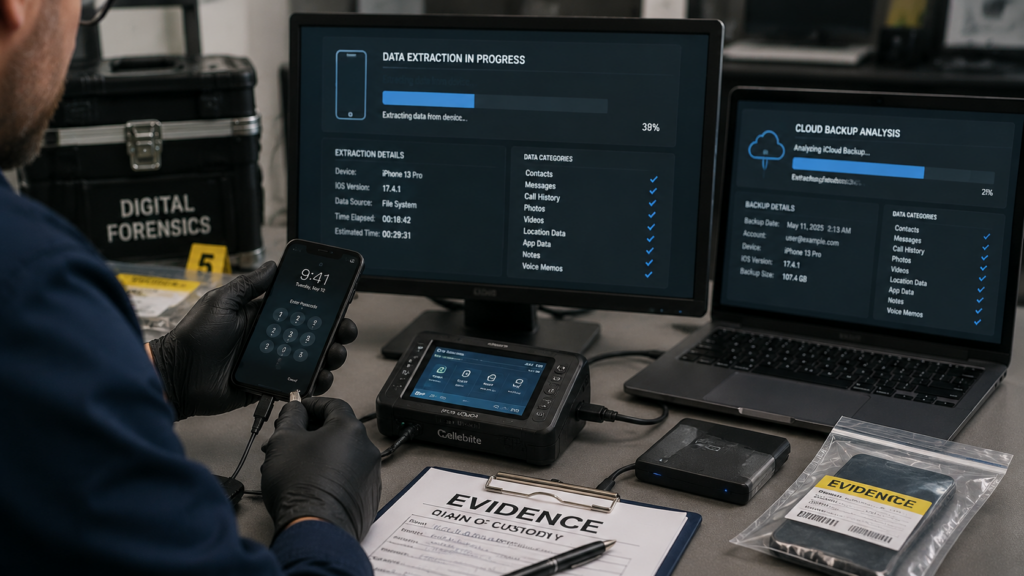
While smartphone evidence can be powerful, it must be collected and presented properly to be admissible in court. Mere screenshots from a phone may be challenged if not authenticated.
Many attorneys work with digital forensic experts to obtain data directly from the device or cloud backups, preserving metadata and timestamps. Courts typically require authentication — meaning the evidence must be verified as accurate and unchanged since collection.
Privacy concerns also arise, as phone data can contain sensitive information. Lawyers must navigate legal standards and sometimes obtain appropriate releases or court orders before accessing certain types of data.
Another consideration is how wearable device data, GPS histories, and smartphone logs interact with other evidence. See our article on self‑driving car liability to understand how multiple data sources can play a role in complex claims.
Real‑World Impact on Courts and Juries
Jurors increasingly expect evidence to be factual and data‑backed. Smartphone evidence helps make claims more tangible by providing real numbers, timestamps, and visuals that jurors can relate to.
In many cases, smartphone data can cut through conflicting testimony or ambiguous memory recall — especially when timelines are disputed. A precise GPS log, for example, may show that a person was at a specific location at a specific time, making it easier for jurors to understand the accident sequence.
Case Studies: Smartphone Evidence Success
While specific case names are confidential, attorneys report scenarios where smartphone evidence helped resolve disputes such as:
- Determining the exact moment a pedestrian was struck based on GPS and motion data
- Verifying vehicle movement within seconds of a collision using smartphone sensor logs
- Corroborating photo evidence with timestamped messaging history about the accident
These data‑driven insights can make a measurable difference in outcomes — whether during settlement negotiations or in jury verdicts.
Preparing Your Smartphone Evidence
If you have been involved in an accident, here are steps to protect and prepare your smartphone evidence:
- Do not delete data — keep location history, photos, videos, and app records intact
- Back up your phone — use cloud services to prevent accidental loss
- Document crash alerts — if your phone captures impact notices or emergency messages, save them
- Share evidence with your attorney early so they can guide collection and preservation before it expires
Conclusion
Smartphone evidence is reshaping how personal injury claims are handled in 2026. With almost every device tracking detailed activity, GPS movement, and time‑stamped media, this form of data often provides clearer, more objective proof than traditional documents alone. Understanding how to collect, preserve, and present smartphone evidence can significantly impact the strength and outcome of your personal injury claim.
Working with experienced legal counsel ensures that your digital evidence is properly authenticated, admissible, and used to reinforce your case at every stage.
For more on modern evidence trends in personal injury law, see our post on AI and digital evidence.
